

2026 Fall Virtual Conference
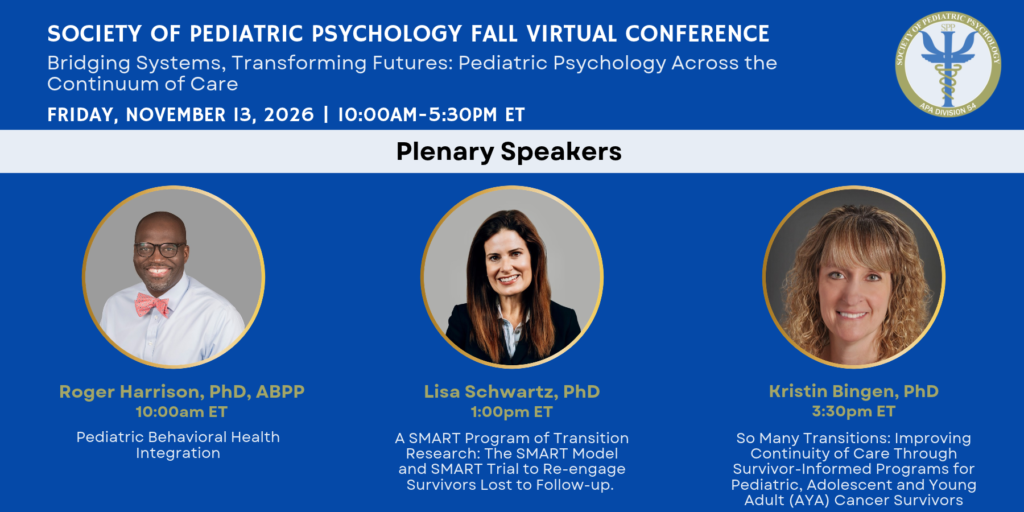
Bridging Systems, Transforming Futures: Pediatric Psychology Across the Continuum of Care
Friday, November 13, 2026
Session 1: 10:00am-12:00pm ET | Session 2: 1:00pm-3:00pm ET | Session 3: 3:30pm-5:30pm ET
Save the date for SPP's Fall Virtual Conference 'Bridging Systems, Transforming Futures: Pediatric Psychology Across the Continuum of Care' on Friday, November 13, 2026!
The Fall Virtual Conference aims to:
- Dedicate a full day of learning about high impact areas of pediatric psychology research produced by SPP research leaders who come from diverse research backgrounds such as treatment and interventions, clinical outcomes, health disparities, and professional development.
- Provide a forum for discussion of current research directions and to consider how research informs evidence-based clinical practice, service delivery, health equity, and policy decisions.
- Increase attendees’ awareness of current advancements in equity, diversity, and inclusion in the field of pediatric psychology and considerations for their own work.
Anna Hood, PhD, 2026 Fall Virtual Conference Chair
Desireé Williford, PhD, MPH, 2026 Fall Virtual Conference Co-Chair
Hosted by the SPP Science and Practice Committee

Register now for the 2026 Fall Virtual Conference! Early registration ends Friday, October 30.
| Early Registration: Ends Oct. 30 at 11:59pm ET |
Regular Registration: Oct. 31 to Nov.13 at 9am ET |
|||||
| 1 Session | 2 Sessions | All 3 Sessions | 1 Session | 2 Sessions | All 3 Sessions | |
| Member | $60 | $120 | $160 | $75 | $150 | $195 |
| Non-Member | $80 | $160 | $220 | $100 | $200 | $265 |
| Student Member | $10 | $10 | $10 | $15 | $15 | $15 |
| Student Non-Member | $20 | $20 | $20 | $25 | $25 | $25 |
*Registration is non-refundable.
Session 1: 10:00am-12:00pm ET (2 CE – APA and NY-PSY)
Plenary Presenter: Roger Harrison, PhD, ABPP
 Dr. Roger Harrison is a licensed clinical psychologist with pediatric specialty and Co-Chief of the Division of Community Care and Wellness within the Department of Child and Adolescent Psychiatry and Behavioral Sciences (DCAPBS) at the Children’s Hospital of Philadelphia (CHOP). He received his PhD in clinical psychology from Brigham Young University and completed his clinical internship and postdoctoral fellowship at Nemours Children’s Health in Wilmington, Delaware.
In his current role, Dr. Harrison builds on his passion for supporting integrated behavioral health care programs in pediatric primary care, schools, and other community-based settings. Across the years, Dr. Harrison has mentored, supervised, and trained many aspiring psychologists and medical professionals. He is a co-founder and co-chair of the DREAM IPC Conference, a national biennial conference for multidisciplinary health professionals that focuses on pediatric integrated primary care.
Dr. Harrison is the honored recipient of many national awards and values teaching and service to his profession. He is the immediate Past-President of the Delaware Psychological Association (DPA) and President-Elect of the Society of Pediatric Psychology (American Psychological Association Division 54). Dr. Harrison is happily married to Ayanna and is the proud father of three remarkable daughters, Anaya, Aliyah, and Amara.
Elissa Jelalian, PhD
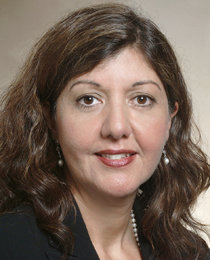
Dr. Jelalian is a Professor of Psychiatry and Human Behavior and Pediatrics at the Alpert Medical School of Brown University and Interim Director of The Miriam Hospital Center for Lifestyle and Health Research. Her research focuses on development and implementation of intensive lifestyle interventions for children and adolescents with higher weight status as well as community-based interventions for promotion of physical activity and prevention of obesity in under-resourced communities. She recently completed a hybrid type 2 implementation study that involved disseminating a family healthy weight program to children from low-income backgrounds living in urban cores of RI. Dr. Jelalian is strongly invested in mentorship and is the Director of the Clinical Psychology Postdoctoral Fellowship Training Program at Brown University.
Marni Axelrad, PhD, ABPP
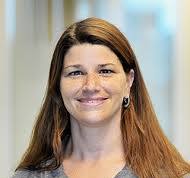 Dr. Axelrad is a licensed clinical psychologist at Texas Children's Hospital/Baylor College of Medicine with more than 20 years of experience in assessment and intervention, largely related to treatment of young children. Dr. Axelrad has also published a brief parent management training manual and has extensive experience supervising as related to manualized treatment and otherwise. Dr. Axelrad currently serves as Clinic Chief in the Psychology Division and has participated in growing our workforce, including master’s trained clinicians providing general mental/behavioral health care outside of the primary care setting, as well as expanding pediatric psychology throughout the Teas Children’s Hospital enterprise.
Session 2: 1:00pm-3:00pm ET (2 CE – APA and NY-PSY)
Plenary Presenter: Lisa Schwartz, PhD
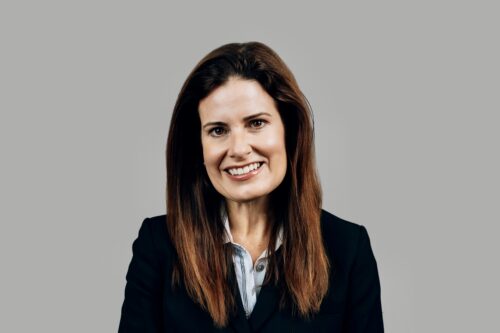 Dr. Schwartz is a Professor of Pediatrics at the Perelman School of Medicine at the University of Pennsylvania and the Wolfson Endowed Chair in Health Services Research at the Children’s Hospital of Philadelphia. She is also Director of AYA Oncology Care Innovation in the Penn Center for Cancer Care Innovation. She is a faculty member of the Abramson Cancer Center at the University of Pennsylvania, a pediatric psychologist at the Children’s Hospital of Philadelphia (CHOP), and a behavioral scientist at the CHOP Center for Childhood Cancer Research. She is also the co-Director and co-Founder of CHOP’s Digital and Personalized Health Research Affinity Group funded through CHOP’s Research Institute. She has focused her career on children, adolescents and young adults (AYA) impacted by cancer (e.g., those with cancer, who survived cancer, or are at increased risk of cancer). Much of her work is guided by the Social-ecological Model of Adolescent and Young Adult Readiness to Transition (SMART) model, which she developed as a framework to guide interventions and care for AYA with chronic health conditions transitioning to adulthood and adult care. Her NIH-, CDC-, and foundation-funded research includes digital health intervention research, development of patient reported outcomes, health services research, and descriptive and longitudinal studies. Variables targeted in her program of research include self-management, adherence, adjustment, health promotion, quality of life, pain, decision making, and transition to adult care of AYA.
Amy Lang, PhD
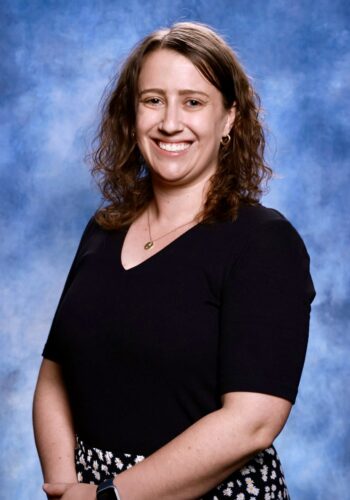
Dr. Amy Lang is an Assistant Professor in the School of Psychological and Behavioral Sciences at Southern Illinois University Carbondale. She is also a licensed psychologist in the state of Illinois. Dr. Lang completed her graduate and post-graduate training at the University of Wisconsin-Milwaukee and Cincinnati Children's Hospital Medical Center, respectively. Dr. Lang's research focuses on the lived experiences of adolescents and young adults with and without chronic medical and psychological health conditions, with an emphasis on the promotion of self-management, health competence, and health-related quality of life during the transition from pediatric- to adult-focused health care.
Gary Kwok, PhD
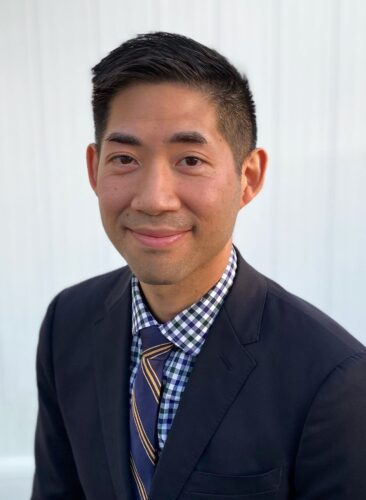 Gary Kwok, PhD is an Assistant Member at the Center for Discovery and Innovation and an Assistant Professor at Hackensack Meridian School of Medicine. Dr. Kwok is a behavioral scientist whose research focuses on improving psychosocial outcomes and quality of life among adolescent and young adult (AYA) cancer survivors as they navigate cancer survivorship alongside critical developmental milestones. His research integrates behavioral science, digital health, and implementation science to develop scalable, accessible, and equitable supportive care interventions for this underserved population. His research program focuses on developing and evaluating digital mindfulness interventions and peer-supported models of care to enhance engagement, psychological well-being, and survivorship outcomes. His work also examines strategies for implementing evidence-based digital interventions across healthcare and community settings to improve access to supportive care. Through this work, Dr. Kwok aims to bridge developmental science, pediatric psychology, and digital health to advance equitable, person-centered survivorship care for AYA cancer survivors.
Session 3: 3:30pm-5:30pm ET (2 CE – APA and NY-PSY)
Plenary Presenter: Kristin Bingen, PhD
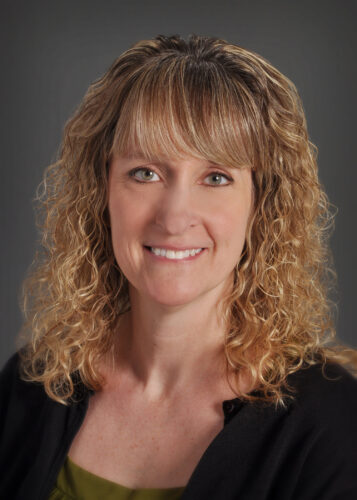 Kristin Bingen, PhD is a Professor of Pediatrics in the Division of Pediatric Psychology and Developmental Medicine at the Medical College of Wisconsin (MCW)-Children’s Wisconsin. She has been a practicing health psychologist and behavioral science researcher in pediatric oncology and blood and marrow transplant (BMT) for over 23 years. She is Co-Director of Children's Wisconsin and Froedtert & MCW's Adolescent and Young Adult (AYA) Cancer Program, currently funded by a Teen Cancer America grant. Dr. Bingen serves on the Children's Oncology Group (COG)'s AYA Committee as the Behavioral Science liaison and as COG’s AYA Responsible Investigator for Children’s Wisconsin’s oncology program. Her primary clinical research interests and expertise are in the evaluation of health-related quality of life (HRQL) and psychosocial aspects of pediatric and AYA cancer and BMT survivorship. Her research includes interpreting and integrating data from quantitative and qualitative patient-reported outcome measures to develop developmentally appropriate, targeted interventions and programs to promote healthy adjustment and improve outcomes for pediatric and AYA cancer and BMT survivors from cancer diagnosis through survivorship.
Jerlym Porter, PhD, MPH
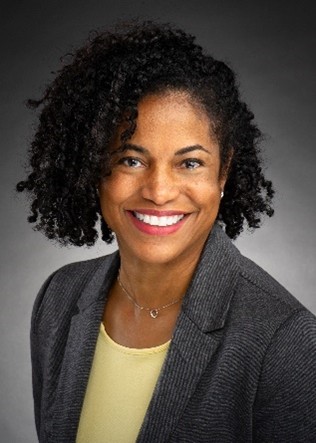 Jerlym Porter, PhD, MPH is an Associate Member in the Department of Psychology and Biobehavioral Sciences at St. Jude Children’s Research Hospital. Her recent involvement in sickle cell disease (SCD) initiatives includes the Cure Sickle Cell Initiative (CureSCI) Patient Readiness and Resilience Working Group and the National Academies of Sciences, Engineering, and Medicine (NASEM) Committee on SCD Social Security Disability Evaluations. As a clinical psychologist, Dr. Porter provides psychotherapeutic support for patients with SCD and families. Her research focuses on improving the quality of life of youth with SCD through examining psychosocial outcomes, with an emphasis on healthcare transition, treatment adherence, and decision-making for transformative treatment options.
Jill Plevinsky, PhD
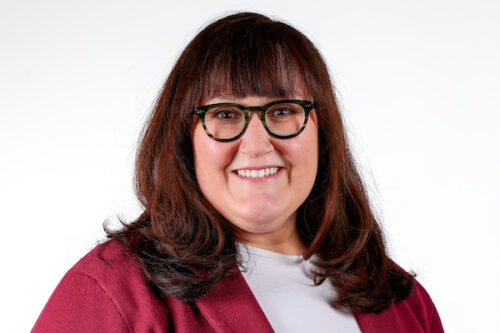 Dr. Jill Plevinsky is an assistant professor of clinical psychiatry at the University of Pennsylvania Perelman School of Medicine and a pediatric transplant psychologist at the Children’s Hospital of Philadelphia. She earned her PhD from Rosalind Franklin University after completing her predoctoral internship in pediatric psychology at Brown University followed by a T32 postdoctoral fellowship in the Center for Adherence and Self-Management at Cincinnati Children’s Hospital. Dr. Plevinsky is a long-standing member of the American Psychological Association and the Society of Pediatric Psychology with past leadership roles in the Adherence and Self-Management, Adolescent/Young Adult, and Digital Health Special Interest Groups, and has given several invited presentations on the topics of adherence, self-management, and transition readiness to both national and international multi-disciplinary audiences through her involvement in the International Pediatric Transplant Association, the American Society of Transplantation, and the Society of Liver Transplantation. Dr. Plevinsky also served as a guest editor for a Special Issue of Clinical Practice in Pediatric Psychology on Adherence and Self-Management, and has authored over 20 manuscripts and two book chapters on these topics.
Session 1: 10:00am-12:00pm ET (2 CE – APA and NY-PSY)
Plenary: Pediatric Behavioral Health Integration
Roger Harrison, PhD, ABPP
Learning Objectives:
- Describe the major benefits of integrated behavioral health.
- Discuss levels of integration for integrated primary care.
- Explore factors that contribute to effective integrated behavioral health programs.
Learner Level: Designed to apply broadly across all levels
Summary:
Integrating mental health care into primary care settings offer many benefits to patients, families and communities (WHO 2022). Many models and levels of integration have been examined (AHRQ 2013) with a goal of better care and health for the whole person. This presentation describes the major benefits of integrated behavioral health, discusses levels of integration within integrated primary care, and explores practical factors that contribute to effective integrated behavioral health programs.
Application of Practice Guidelines for Treatment of Youth with High Weight Status
Elissa Jelalian, PhD
Learning Objectives:
- Analyze clinical and developmental factors influencing IHBLT delivery in adolescents to guide patient referral and intervention delivery.
- Apply implementation science frameworks to evaluate, adapt, and scale evidence-based health behavior and lifestyle treatments across varied community and healthcare settings.
Learner Level: Designed to apply broadly across all levels
Summary:
The goal of this presentation is to examine translation of current clinical practice guidelines for youth with high weight status (Hampl et al., 2023) amid a rapidly evolving pediatric obesity treatment landscape. Using examples from recent research, this talk will explore strategies for optimizing intensive health behavior and lifestyle treatment (IHBLT) across the continuum of care. Specifically, the presenter will discuss: 1) navigating clinical and developmental nuances when delivering IHBLT to adolescents—particularly alongside the rise of obesity pharmacotherapy and concerns regarding eating disorder risk, and 2) leveraging implementation science frameworks to adapt and scale evidence-based lifestyle interventions across diverse community settings.
Pediatric Psychology Integration
Marni Axelrad, PhD, ABPP
Learning Objectives:
- List relevant factors in program development in pediatric psychology.
- Discuss necessary collaboration with medical leaders to meet patient needs at a program level.
Learner Level: Intermediate
Summary:
Dr. Axelrad will participate in a symposia related to the continuum of care in pediatric psychology. Dr. Axelrad will discuss integrating psychology across a hospital system, program development, evaluation, and growth over time.
Session 2: 1:00pm-3:00pm ET (2 CE – APA and NY-PSY)
Plenary: A SMART Program of Transition Research: The SMART Model and SMART Trial to Re-engage Survivors Lost to Follow-up
Lisa Schwartz, PhD
Learning Objectives:
- Describe the Social-ecological Model of AYA Readiness to Transition.
- Describe application of SMART to transition interventions.
- Describe a Sequential Multiple Assignment Randomized Trial.
Learner Level: Beginner to Intermediate
Summary:
The talk will review the Social Ecological Model of Adol/Young Adult Readiness to Transition to Adult Care (SMART). This will include it’s application to other populations including cancer and sickle cell disease. The importance of a social-ecological approach to transition research and practice will be emphasized with examples. I will then discuss its application to a current intervention to re-engage survivors lost to follow-up. (https://reporter.nih.gov/search/sxdbwZ70Wk-rDv8y-ayZQA/project-details/11062443). This intervention is a SMART trial—Sequential Multiple Assignment Randomized Trial. I will discuss this methodology and the digital interventions within our trial. Overall, the application of SMART and the theme of transitions in care will be emphasized.
Ready or Not, Here They Come: Health and Health Care Transition Experiences of Adolescents and Young Adults With and Without Chronic Health Conditions
Amy Lang, PhD
Learning Objectives:
- Describe patient-, clinic-, and systems-level barriers and facilitators to health care transition.
- Recognize challenges to health care transition research and clinical work, especially in rural settings.
Learner Level: Designed to apply broadly across all levels
Summary:
Successful transition from pediatric to adult health care settings is imperative for all adolescents and young adults, regardless of their chronic health condition status. However, the majority of existing health care transition research and clinical efforts have focused on adolescents and young adults with chronic health conditions (Graves et al., 2019; Leeb et al., 2017) living in urban settings (Narla et al., 2021). Preliminary research suggests that adolescents and young adults without chronic health conditions are less prepared for health care transition than their counterparts with chronic health conditions (Eaton et al., 2017). Further, adolescents and young adults living in rural communities may face additional barriers to health care transition compared to those living in urban communities, such as limited selection of health care providers and limited access to public transportation (Fenton et al., 2022). Thus, it is important for health care transition research to expand its scope to include rural adolescents and young adults without chronic health conditions. This symposium will focus on patient-, clinic-, and systems-level barriers and facilitators to health care transition across two areas of research: 1) evaluation of the implementation of an integrated primary care health care transition protocol in an urban setting (Murphy et al., 2026); and 2) health care transition experiences of adolescents and young adults in a rural setting.
Digital Mindfulness as Supportive Care: Addressing Psychosocial Needs Among Adolescent and Young Adult Cancer Survivors Across the Survivorship Continuum
Gary Kwok, PhD
Learning Objectives:
- Identify the unique psychosocial needs and developmental challenges experienced by adolescent and young adult (AYA) cancer survivors across the cancer survivorship continuum.
- Describe the potential applications of digital mindfulness interventions and other technology enabled supportive care approaches to address psychosocial needs among AYA cancer survivors.
- Evaluate key factors that influence the implementation, engagement, and sustainability of digital supportive care interventions within clinical and community-based settings.
Learner Level: Beginner to Intermediate
Summary:
Approximately 84,100 adolescents and young adults (AYAs; ages 15–39) are diagnosed with cancer each year in the United States (National Cancer Institute, 2024). AYA cancer survivors face unique psychosocial challenges because cancer occurs during a period marked by critical developmental milestones, including identity formation, education, career development, relationships, financial independence, and family planning (Bleyer, 2002; Coccia et al., 2012). Consequently, AYAs experience elevated rates of psychological distress, anxiety, and depression, yet many do not receive needed mental health services (Keegan et al., 2012; Osmani et al., 2023). Mindfulness-based interventions (MBIs) are an evidence-based approach for reducing psychological distress and improving quality of life among individuals with cancer. Guided by the Mindful Coping Model, mindfulness promotes adaptive coping through enhanced emotion regulation, cognitive reappraisal, and positive affect (Garland et al., 2009; Garland et al., 2017). Although MBIs have demonstrated feasibility and efficacy among young adults with cancer (Campo et al., 2017; Paterson & McDonald, 2015), traditional in-person programs are often limited by barriers such as travel, illness, competing academic or work demands, and caregiving responsibilities. Digital mindfulness interventions offer a scalable and accessible alternative by allowing AYAs to engage in supportive care at their convenience while reducing logistical and geographic barriers (Amagai et al., 2022; Subnis et al., 2020). Growing evidence supports the effectiveness of digital mindfulness interventions for improving psychological well-being across diverse populations, including individuals with cancer (Buneviciene et al., 2021).
This presentation will provide a brief overview of the psychosocial needs of AYA cancer survivors and discuss how digital mindfulness interventions can be leveraged to provide accessible supportive care for this population. We will highlight key gaps identified through our research, with particular emphasis on optimizing user engagement and addressing the challenges of translating digital interventions into real-world clinical and community settings. We will also present findings from our implementation science research examining strategies to support the integration, adoption, and sustainability of digital mindfulness and other evidence-based supportive care interventions across the cancer survivorship continuum. Finally, we will discuss future research directions and ongoing efforts to advance this work toward the broader goals of translational science.
Session 3: 3:30pm-5:30pm ET (2 CE – APA and NY-PSY)
Plenary: So Many Transitions: Improving Continuity of Care Through Survivor-Informed Programs for Pediatric, Adolescent and Young Adult (AYA) Cancer Survivors
Kristin Bingen, PhD
Learning Objectives:
- Describe the transition needs of pediatric and AYA cancer survivors and their caregivers.
- Identify strategies for implementing a transition program for pediatric and AYA cancer survivors and their caregivers.
- Identify approaches that psychologists can integrate into practice to facilitate health care transition among the youth they serve.
Learner Level: Designed to apply broadly across all levels
Summary:
Transitioning from active cancer treatment to survivorship care is a stressful, challenging period for pediatric and adolescent and young adult (AYA) patients and their caregivers. While trying to develop a “new normal” following cancer treatment, the majority of survivors of pediatric and AYA cancer are faced with a myriad of physical, neurocognitive, and psychological long-term effects of cancer and its treatment across the life span (Bhatia, Tonorezos, & Landier, 2023; Bhatt et al., 2024). Further complicating the transition to survivorship care, AYA cancer survivors are learning how to navigate the complexities of moving from a pediatric to an adult health care system during a critical developmental period of establishing their autonomy from their parents. As they mature, AYAs are increasingly expected to be responsible for self-management behaviors for their cancer care, such as scheduling and attending oncology appointments, seeking help for symptom management, managing their stress and emotions, and medication-taking. Systematic reviews indicate that the majority of studies have found that health care transition interventions are associated with positive outcomes in three domains: population health (disease-specific outcomes, health-related quality of life, self-care skills, adherence to care), patient satisfaction, and health care utilization and costs (Gabriel et al., 2017; Schmidt et al, 2020). Despite the need and benefits, there continues to be a gap in evidence-based transition interventions and programs for pediatric and AYA cancer survivors (Ma et al., 2024). Recognizing the unmet transition needs at our institution, we conducted an end of treatment needs assessment of our pediatric and AYA cancer survivors and their caregivers which informed the development and implementation of a transition to survivorship program (Karst et al., 2018). An evaluation of our Bridge to Next Steps Program demonstrated feasibility and acceptability as well as promising outcome results of improved survivor and caregiver preparedness for survivorship care and decreased caregiver distress and anxiety (Bingen et al., 2023). Our Bridge to Next Steps research will be presented, along with preliminary results from a recently completed study at our institution that evaluated the self-management needs of our AYA cancer survivors who are transitioning from pediatric to adult-based health care. The role of the psychologist in supporting youth’s transition from pediatric to adult health care will be highlighted (American Psychological Association, APA Adolescent and Young Adult Transition Taskforce, 2020).
Beyond Transfer: Supporting Successful Healthcare Transition in Sickle Cell Disease
Jerlym Porter, PhD, MPH
Learning Objectives:
- Describe intervention strategies used in healthcare transition programs to promote transition readiness and disease self-management for adolescents and young adults with sickle cell disease.
- Interpret findings regarding the effectiveness of transition interventions on patient and healthcare outcomes.
Learner Level: Designed to apply broadly across all levels
Summary:
This presentation will provide an overview of healthcare transition interventions for adolescents and young adults with sickle cell disease, with a focus on strategies to promote transition readiness, disease self-management, and engagement in adult-oriented care. Drawing from both clinical experience and the broader literature, the presentation will highlight components of transition programs, discuss evidence regarding their effectiveness, and review outcomes related to self-management, healthcare utilization, and successful transfer to adult care. Implications for pediatric psychologists and opportunities to support youth during the transition to adulthood will be discussed.
From Adherence to Autonomy: Building Self-Management and Transition Readiness in Pediatric Solid Organ Transplant
Jill Plevinsky, PhD
Learning Objectives:
- Identify the ways in which challenges with medication adherence vary from a developmental perspective.
- Describe pediatric self-management using a socioecological framework.
- Apply evidence-based strategies to promote adherence, self-management, and transition readiness in their pediatric populations.
Learner Level: Designed to apply broadly across all levels
Summary:
This presentation will discuss the progression from the development of adherence skills to emerging self-management to autonomy to transition readiness in pediatric solid organ transplant recipients with an emphasis on the evidence-based strategies I utilize in my clinical practice and how pediatric psychologists can bridge developmental and systems gaps along the way. Utilizing a developmental framework, barriers to adherence will be discussed as they present along the lifespan. Then I will shift to discussing adherence as an element of self-management, and the various aspects of self-management required for optimal health outcomes in this specific population of pediatric solid organ transplant recipients. This will then lead to a discussion of the transition to adult care, including barriers, facilitators, and perspectives from both pediatric and adult providers. I’ll then conclude with presenting elements of my own clinical program development in pediatric liver transplant specifically, including data from our quality improvement efforts, as well as other practical strategies pediatric psychologists can use to enhance these skills among their patients and their caregivers from childhood through young adulthood.
Speakers reported no conflicts of interest.
 Attendees will receive 2 CE credits for attending the entirety of each session live (a total of 6 CE for attending the entirety of all three sessions of the Fall Virtual Conference live).
The Society of Pediatric Psychology is approved by the American Psychological Association to sponsor continuing education for psychologists. The Society of Pediatric Psychology maintains responsibility for this program and its contents.
The Society of Pediatric Psychology (Division 54 of the American Psychological Association) is recognized by the New York State Education Department’s State Board for Psychology as an approved provider of continuing education for licensed psychologists #PSY-0279.
SPP's Virtual Internships and Fellowships on Parade will be held on Wednesday, September 16, 2026 at 5:30pm-7:00pm ET.
This event aims to be an informal opportunity for SPP students, trainees, and pediatric psychology programs to interact and connect. Programs will have the opportunity to host virtual rooms for students and trainees to drop-in and learn more about the program. Each internship and fellowship program will be in separate breakout rooms with 1-2 program representatives in each room. By using a virtual platform, this event creates an equitable option for programs to easily connect with students and trainees, including those who may not be able to attend the SPP Annual Conference in-person. Please contact info@pedpsych.org with questions.
Deadline for programs to sign-up: Friday, September 4, 2026 at 5:00pm ET
Deadline for students/trainees to sign-up: Friday September 11, 2026 at 5:00pm ET
Participating Organizations:
Internships:
Ann and Robert H Lurie Children's Hospital of Chicago
Baylor College of Medicine / Texas Children's Hospital
Brown University
Children’s Healthcare of Atlanta at Emory University School of Medicine
Children’s Hospital Orange County, a part of Rady Children’s Health
Children's Hospital Colorado/University of Colorado School of Medicine
Children's Mercy Kansas City
Children's Hospital Los Angeles
Children's National Hospital
Cincinnati Children's Hospital Medical Center
Dell Medical School/Dell Children's Medical Center
Geisinger Health System
Jackson Health System
Johns Hopkins All Children's Hospital
Kennedy Krieger Institute/Johns Hopkins School of Medicine
Nationwide Children's Hospital
Nationwide Children's Hospital
Nemours Children's Health
Ochsner Children's Hospital (New Orleans, LA)
Oregon Health & Science University
Phoenix Children's
Rush University Medical Center Chicago
St. Jude Children's Research Hospital
The Children's Hospital of Philadelphia
The Hospital for Sick Children (SickKids)
University of Louisville School of Medicine
University of Miami Miller School of Medicine
University of Michigan/Michigan Medicine
University of Nebraska Medical Center: Munroe-Meyer Institute
University of Oklahoma Health
University of Vermont Medical Center
West Virginia University School of Medicine
Fellowships:
Alpert Medical School of Brown University
Ann & Robert H Lurie Children's Hospital of Chicago/Northwestern University
Children's Health Dallas
Children's Hospital Colorado/University of Colorado School of Medicine
Children's Hospital Los Angeles
Children's Hospital of Philadelphia
Children's Hospital Orange County, a part of Rady Children's Health
Children's Mercy Kansas City
Children's National Hospital
Children's Specialty Group, PLLC
Cincinnati Children's Hospital Medical Center
Dana-Farber Boston Children's Cancer and Blood Disorders Center
Golisano Children's at UK HealthCare
Jackson Health System/University of Miami
Johns Hopkins All Children’s Hospital
Johns Hopkins University
Kennedy Krieger Institute/ Johns Hopkins School of Medicine
Levine Children's Hospital
Nationwide Children's Hospital
Nemours Children's Health, Jacksonville
NYU Hassenfeld Children's
Ochsner Children's Hospital
Phoenix Children's
Riley Children's Health
Rush University Medical Center
St. Jude Children's Research Hospital
St. Louis Children's Hospital
Stanford University School of Medicine
Texas Children's Hospital/Baylor College of Medicine
The University of Texas MD Anderson Cancer Center
University of Arkansas for Medical Sciences
University of Colorado School of Medicine, Department of Psychiatry, Harris Program
University of Louisville School of Medicine
University of Michigan
University of Nebraska Medical Center: Munroe-Meyer Institute
University of Oklahoma Health
West Virginia University School of Medicine