

SPP Webinars
Society of Pediatric Psychology (SPP) webinars are free to members! Non-members can access webinars for the following cost:
| Non-Member Registrants (>1.5 CE Credits) | $50.00 |
| Non-Member Registrants (1 - 1.5 CE Credits) | $30.00 |
| Non-Member Student Registrants | $10.00 |
Registration is non-refundable.
Please note the following CE designations:
APA - Psychologists will receive CE credit for attending the entirety of the webinar live (does not include New York State Licensed Psychologists).
* Ethics webinars may not meet the criteria for specific states.
APA and NY-PSY - Psychologists will receive CE credit for attending the entirety of the webinar live, including New York State Licensed Psychologists.
* Ethics webinars may not meet the criteria for Ethics CE for New York State Licensed Psychologists. New York State licensees are responsible for complying with New York State laws, rules, and regulations: https://www.op.nysed.gov/professions/psychology/laws-rules-regulations
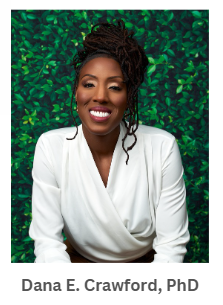
Can We Still Say That? Ethics Under Pressure in Pediatric Psychology
1 CE (APA Ethics and NY-PSY*)
Thursday, November 5, 2026 | 12:00-1:00pm ET
Presented by Dana E. Crawford, PhD
Registration for this webinar is a two-step process:
2. Click on the link in the Zoom Registration email you receive to finalize registration and get the Zoom information.
Summary:
Pediatric psychologists are practicing in an era of epistemicide, the systematic suppression of knowledge, and institutional retrenchment. The hospitals, clinics, and schools where children receive care are under financial and political pressure, and conversations about race, gender-affirming care, LGBTQIA+ identities, and the information children need about their world are increasingly silenced. The clinical consequences are documented: racism measurably harms child and adolescent health (Trent et al., 2019), autism diagnoses arrive years after families’ first concerns for Black children (Constantino et al., 2020), anti-transgender legislation functions as a public health concern for youth (Barbee et al., 2022), and gender-affirming care is associated with reduced depression and suicidality in transgender and nonbinary youths (Tordoff et al., 2022). Adults also consistently underestimate how early children process race, delaying conversations children are ready to have (Sullivan et al., 2021).
This webinar grounds these realities in the APA Ethical Principles of Psychologists and Code of Conduct, including Principle E, Standard 2.01b (competence regarding cultural factors), and Standard 3.01 (unfair discrimination), and teaches an internal skill set drawn from Crawford Bias Reduction Theory & Training (CBRT): the ABCP self-scan (affect, behavior, cognition, physiology) and the LET-UP model (Listen, Empathize, Talk, Unconditional Neutral Regard, Plan) for regulating bias and countertransference in the moment. The session addresses reactions not only toward young patients but toward caregivers, teachers, administrators, systems, and the frightened health care colleagues pediatric psychologists steady in consultation and liaison work, colleagues whose own bias experiences are linked to burnout (Hunderfund et al., 2025). It engages honest disagreement within the profession about whether these topics belong in children’s care, testing positions against developmental evidence and the Ethics Code rather than assumed agreement, and closes with each participant writing one commitment to reduce bias inside themselves, between people, and around them in their systems.
Presenter Bio:
Dr. Crawford is a licensed clinical psychologist in private practice in Manhattan and the founder of Crawford Bias Reduction Theory & Training (CBRT). She is the author of Healing Bias (W. W. Norton, 2025) and the creator of R.A.C.E. Cards (W. W. Norton, 2024). Across more than 20 years of clinical practice, she has delivered over 400 trainings on bias, ethics, and culturally responsive care for healthcare, education, government, and corporate organizations, including CE ethics programming for the Maryland Psychological Association and the 2026 Marcus Autism Center Summer Symposium at Emory University. Her work translates the science of bias into practical, clinically grounded skills for the settings where clinicians actually work.
Learning Objectives:
- Describe how bias, epistemicide, and institutional retrenchment create ethical risks in psychological care for children, adolescents, and families, with reference to relevant principles and enforceable standards of the APA Ethics Code.
- Identify personal ABCP cues (affect, behavior, cognition, physiology) that signal bias or countertransference reactions toward caregivers, teachers, administrators, health care providers, and the systems that shape children’s care.
- Apply the LET-UP model as an internal regulation and repair skill during emotionally charged interactions in pediatric settings, from the therapy room to the team meeting to supervision.
Learning Level:
Designed to apply broadly across all levels.
Conflict of Interest:
The presenter reports no conflicts of interest.
Continuing Education:
Attendees will receive 1 CE credit for attending the entirety of this webinar live.
The Society of Pediatric Psychology is approved by the American Psychological Association to sponsor continuing education for psychologists. The Society of Pediatric Psychology maintains responsibility for this program and its contents.
* Ethics webinars may not meet the criteria for specific states.
The Society of Pediatric Psychology (Division 54 of the American Psychological Association) is recognized by the New York State Education Department’s State Board for Psychology as an approved provider of continuing education for licensed psychologists #PSY-0279.
* Ethics webinars may not meet the criteria for Ethics CE for New York State Licensed Psychologists. New York State licensees are responsible for complying with New York State laws, rules, and regulations: https://www.op.nysed.gov/professions/psychology/laws-rules-regulations.
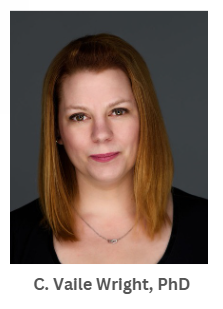
When Youth Turn to AI: Clinical, Practical, and Ethical Implications for Pediatric Psychologists
1.5 CE (APA and NY-PSY)
Thursday, October 22, 2026 | 12:00pm-1:30pm ET
Presented by C. Vaile Wright, PhD
Summary:
This presentation will examine the latest evidence on youth engagement with generative AI, explore frameworks for understanding AI-human relationships, and discuss how pediatric psychologists can assess, monitor, and ethically respond to AI use in clinical practice. Particular attention will be given to vulnerable youth populations, emerging patterns of AI-mediated help-seeking, and the evolving role of psychologists in a world where digital companions increasingly intersect with mental health care.
Presenter Bio:
Vaile Wright, PhD, is the inaugural Senior Director for Health Care Innovation at the American Psychological Association, where she leads national efforts to advance the responsible use of technology and data in mental health care. A licensed psychologist and nationally recognized expert, Dr. Wright develops strategies to expand access to care, strengthen quality measurement, and modernize mental health service delivery. She is a trusted voice in federal health policy, with research published in leading peer reviewed journals, and is a frequent contributor to national media. Dr. Wright earned her PhD from the University of Illinois at Urbana Champaign and is licensed to practice psychology in the District of Columbia.
Learning Objectives:
After the presentation, attendees will be able to:
- Evaluate current evidence regarding how children, adolescents, and young adults use generative AI for emotional support, mental health information, and help-seeking.
- Identify potential benefits and risks associated with these interactions.
- Integrate ethical, clinical, and practical considerations into assessment and treatment by developing strategies to discuss, monitor, and responsibly address AI use among youth and families.
Learning Level:
Designed to apply broadly across all levels.
Conflict of Interest:
The presenter reports no conflicts of interest.
Continuing Education:
Attendees will receive 1.5 CE credits for attending the entirety of this webinar live.
The Society of Pediatric Psychology is approved by the American Psychological Association to sponsor continuing education for psychologists. The Society of Pediatric Psychology maintains responsibility for this program and its contents.
The Society of Pediatric Psychology (Division 54 of the American Psychological Association) is recognized by the New York State Education Department’s State Board for Psychology as an approved provider of continuing education for licensed psychologists #PSY-0279.
Behavioral Sleep Intervention via Telehealth for Preschoolers with ADHD: A Deep Dive into the Nuances of Telehealth
1 CE (APA and NY-PSY)
Friday, October 2, 2026 | 12:00-1:00pm ET
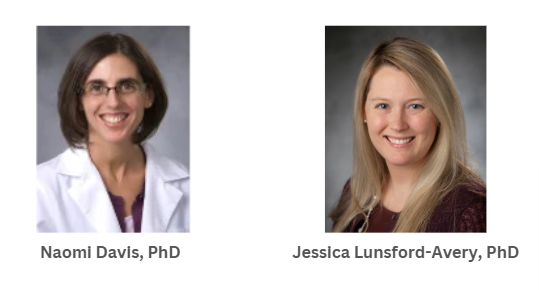
Presented by Naomi Davis, PhD and Jessica Lunsford-Avery, PhD
Moderator: Maureen McQuillan, PhD
Summary:
Preschool is a critical window for early Attention-Deficit/Hyperactivity Disorder (ADHD) intervention (Sonuga-Barke & Halperin, 2010). Sleep disturbance represents a potential intervention target yet is rarely a focus of the gold-standard treatment (behavioral parent training; BPT) (Lunsford-Avery et al., 2025). In this webinar, we will present a novel telehealth intervention for preschoolers aged 3-5 who are at-risk for ADHD (i.e., those with elevated ADHD symptoms) (Davis et al., 2026). Preschool Attention and Sleep Support (PASS) is an 8-week treatment that streamlines two empirically-based interventions – BPT and Behavioral Sleep Medicine (BSM). We will review PASS content and discuss modifications to caregiver-focused interventions for use in a telehealth format. Results of a recent pilot randomized controlled trial of PASS will be presented, including its feasibility, acceptability, and preliminary effectiveness compared to an active control group (BPT alone) for improving ADHD and sleep in early development.
Bios:
Naomi Davis, PhD: Dr. Naomi Davis is a licensed clinical psychologist and an Associate Professor in the Department of Psychiatry and Behavioral Sciences at the Duke University School of Medicine. She received her PhD from the University of Massachusetts Boston and completed her predoctoral and postdoctoral training at the University of North Carolina at Chapel Hill. Dr. Davis serves as Director of Clinical Services and Training for the Duke ADHD Program, where she maintains a clinical practice and is actively involved in teaching and training psychology graduate students and interns. Dr. Davis’s primary research focuses on understanding early developmental trajectories of ADHD and autism. She has co-authored numerous articles and participated in multiple federally-funded research projects on ADHD and co-occurring conditions.
Jessica Lunsford-Avery, PhD: Dr. Jessica Lunsford-Avery is an Associate Professor in the Department of Psychiatry and Behavioral Sciences at the Duke University School of Medicine and a licensed clinical psychologist. She received her undergraduate degree in Psychology from the University of Virginia and earned her Master’s and Doctorate degrees in Clinical Psychology from the University of Colorado Boulder. Since 2014, she has served as a core faculty member of the Duke ADHD Program, where she engages in research, education, and clinical services. Dr. Lunsford-Avery has published more than 50 peer-reviewed manuscripts and book chapters on topics related to sleep, ADHD, and mental health in children and adults. Over the past decade, her research program has been continuously funded by the National Institute of Mental Health. Further research support has been provided by the Duke Institute for Brain Sciences and the Duke Children’s Health Discovery Initiative. Her work has been featured in the Washington Post and on NPR’s 1A, NPR’s Morning Edition, The Matt Walker Podcast, and “Talking Sleep,” the official podcast of the American Academy of Sleep Medicine.
Maureen McQuillan, PhD (moderator): Dr. Maureen McQuillan is a clinical psychologist at Riley Hospital for Children and an Assistant Professor of Pediatrics at Indiana University School of Medicine. She is the Associate Director of the Healthy Sleep for Kids Lab with Dr. Sarah Honaker. She is the Chair for the Sleep Special Interest Group of the Society of Pediatric Psychology, and serves on the Science and Research Committee for the Society of Behavioral Sleep Medicine. Maureen trained at the University of Notre Dame for undergrad and Indiana University for her PhD. She completed her clinical internship and fellowship at Indiana University School of Medicine, specializing in pediatric psychology and behavioral sleep medicine. Dr. McQuillan’s primary focus is on researching and treating adolescent insomnia. She is passionate about helping improve access to care, particularly via telehealth, and expanding training opportunities for learners interested in a career in pediatric psychology and behavioral sleep medicine.
Learning Objectives:
- Identify three therapeutic strategies taught to caregivers in a telehealth behavioral sleep and ADHD intervention for preschoolers.
- Describe two clinical outcomes improved through a telehealth behavioral sleep and ADHD intervention for preschoolers.
- Identify two considerations for implementing a behavioral sleep and ADHD intervention for preschoolers in a telehealth format.
Learning Level:
Designed to apply broadly across all levels.
Conflict of Interest:
Dr. Lunsford-Avery is a consultant for grant R01MH135875 (Rutgers University).
Continuing Education:
Attendees will receive 1 CE credit for attending the entirety of this webinar live.
The Society of Pediatric Psychology is approved by the American Psychological Association to sponsor continuing education for psychologists. The Society of Pediatric Psychology maintains responsibility for this program and its contents.
The Society of Pediatric Psychology (Division 54 of the American Psychological Association) is recognized by the New York State Education Department’s State Board for Psychology as an approved provider of continuing education for licensed psychologists #PSY-0279.
Psychosocial Screening in Youth with Type 1 Diabetes: Identifying Risk and Improving Outcomes
1 CE (APA and NY-PSY)
Wednesday, September 2, 2026 | 12:00pm-1:00pm ET
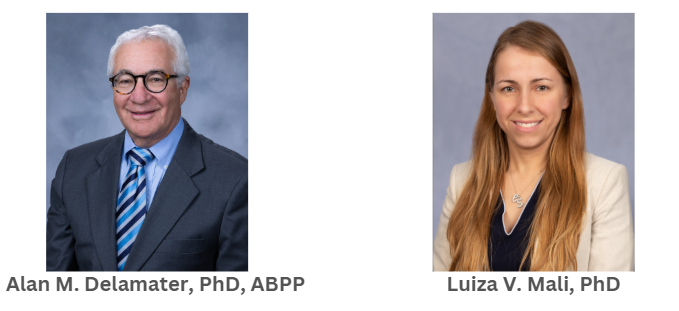
Presented by Alan M. Delamater, PhD, ABPP and Luiza V. Mali, PhD
Summary:
A thorough understanding of illness requires consideration of the complex interplay between biological (e.g., genetic vulnerability), psychological (e.g., mood, health behaviors, motivation) and social factors (e.g, family relations) (Engel, 1979). Integrated care models, which include routine, comprehensive psychosocial screening, are recommended by guidelines from major professional organizations for youth with diabetes (de Wit et al., 2022). Screening has been found to be feasible and acceptable (Brodar et al., 2021; Schwartz, Cline and Anderson, 2011; Wong et al., 2020), and it can facilitate identification of issues that may impact glycemic levels and regimen adherence (Brodar et al., 2021; Mali et al., 2025). While some psychosocial screening programs within pediatric diabetes are typically narrow, focusing primarily on assessing isolated aspects of functioning, such as quality of life or depression (de Wit et al., 2014), recent models have started to incorporate comprehensive screening to facilitate identification of risk for mental health challenges and treatment engagement issues that may prevent optimal health (Brodar et al., 2021, Brodar et al., 2022). This presentation will provide an overview the why, what, when, and how of psychosocial screening of youth with T1D and will consider how results can be incorporated in clinical care.
Presenter Bios:
Alan Delamater, PhD, ABPP: Alan M. Delamater received his PhD in clinical psychology from the University of Georgia in 1981. He is Professor of Pediatrics and Psychology and Director of Clinical Psychology in the Department of Pediatrics, and Director of Research in the Mailman Center for Child Development at the University of Miami, where he has been since 1991. Dr. Delamater has received many research grants, has served on many grant review panels, and has published widely in the field of pediatric psychology and behavioral medicine, focusing on health disparities and the role of psychosocial and behavioral factors in diabetes. He has served in leadership roles with the American Psychological Association (APA), the American Diabetes Association (ADA), the International Society for Pediatric and Adolescent Diabetes, and the Society of Behavioral Medicine (SBM). Dr. Delamater is a Fellow of the APA and SBM. He has received several awards from the SBM, including the LifeScan Diabetes Research Award (1997 and 1999), the Outstanding Contributions to Research Award from the Child and Family Special Interest Group (2012), the C. Tracy Orleans Distinguished Service Award (2016), the Lifetime Achievement Award from the Child and Family Special Interest Group (2017), and the Distinguished Mentor Award (2019). In 2022, he received the Richard R. Rubin Award for Behavioral Diabetes Research by the ADA, and in 2025 he received the Dennis Drotar Distinguished Research Award in Pediatric Psychology by the APA Society of Pediatric Psychology. Dr. Delamater is active as a teacher and clinician and is board-certified in clinical health psychology.
Luiza V. Mali, PhD: Luiza Mali, PhD, received her PhD in Clinical Psychology from the University of Southern California in 2020. She has been an Assistant Professor of Clinical Pediatrics in the Department of Pediatrics at the University of Miami (UM) since 2021. Dr. Mali is the psychologist for the Pediatric Diabetes Clinic at the Mailman Center for Child Development, where she runs a comprehensive psychosocial clinic program, supports families and patients during clinic visits, and acts as liaison between families and the medical team. Dr. Mali has published research on the impact of psychosocial factors on glycemic levels and has received small grants to evaluate the impact of integrated behavioral health care and develop more targeted, family-centered psychosocial screening for youth with T1D. She is active as a clinician and supervises interns and practicum students that are part of UM’s training program.
Learning Objectives:
After the presentation, attendees will be able to:
- Describe the psychosocial challenges commonly experienced by youth with T1D and the rationale for routine psychosocial screening in pediatric diabetes care.
- Identify evidence-based domains and possible screening tools.
- Discuss strategies for responding to positive screens and integrating behavioral health into diabetes management.
Learning Level:
Intermediate to Advanced.
Conflict of Interest:
The presenters report no conflicts of interest.
Continuing Education:
Attendees will receive 1 CE credit for attending the entirety of this webinar live.
The Society of Pediatric Psychology is approved by the American Psychological Association to sponsor continuing education for psychologists. The Society of Pediatric Psychology maintains responsibility for this program and its contents.
The Society of Pediatric Psychology (Division 54 of the American Psychological Association) is recognized by the New York State Education Department’s State Board for Psychology as an approved provider of continuing education for licensed psychologists #PSY-0279.
Approaches for Psychologists in Recruiting, Training, and Maintaining Master’s-Prepared Clinicians as Partners in the Delivery of Effective Mental Health Care
1 CE (APA and NY-PSY)
Thursday, June 25, 2026 | 12:00pm-1:00pm ET
Presented by Marni Axelrad, PhD, ABPP, Eric M. Butter, PhD, and F. Lynne Merk, PhD
Summary:
Given the Mental and Behavioral Health (MBH) crisis among our youth, access to effective, evidence-based MBH care is a rising concern. A significant barrier to accessing MBH services is the shortage of providers trained in evidence-based treatment compared to the need for care. Psychologists are well-positioned to develop training programs that promote health equity such that all youth receive high quality, evidenced based MBH services in whatever setting they receive care. Topics will include recruitment/hiring, onboarding, administrative supervision and training. Potential institutional barriers will be discussed. In providing effective, evidence-based training for master’s prepared clinicians, we can create a broader, more diverse applicant pool and financial sustainability for MBH programs. Thus, ultimately leading to faster and more comprehensive spread of evidence-based treatment for all youth.
Presenter Bios:
Marni Axelrad, PhD, ABPP: Dr. Axelrad is a licensed clinical psychologist at Texas Children's Hospital/Baylor College of Medicine with more than 20 years of experience in assessment and intervention, largely related to treatment of young children. Dr. Axelrad has also published a brief parent management training manual and has extensive experience supervising as related to manualized treatment and otherwise. Dr. Axelrad currently serves as Clinic Chief in the Psychology Division and has participated in growing our workforce, including master’s trained clinicians providing general mental/behavioral health care outside of the primary care setting.
Eric M. Butter, PhD: With nearly three decades of leadership in academic pediatric psychology and hospital administration, Dr. Butter brings experience in strategic planning, operational stewardship, and responsible resource management across complex healthcare systems to the presentation. Dr. Butter has been a pediatric psychologist and appointed at Nationwide Children's Hospital for 27 years within in multiple specialty areas of Pediatrics and Psychiatry, a clinical leader as a director of Psychology and/or Behavioral for 18 years, and Chief of Psychology for 11 years. He is a Professor of Pediatrics (College of Medicine with joint appointments in Psychiatry (College of Medicine) and Psychology (Arts & Sciences). He has been a leader in the American Psychological Association (APA) continuously for 25 years, with executive service on the APA Board of Directors. Dr. Butter has also been continuously funded as a clinical researcher for more than 25 years.
F. Lynne Merk, PhD: Dr. Merk is a licensed clinical psychologist at Cincinnati Children’s Hospital Medical Center with more than 20 years experience specializing in child and adolescent mental health assessment and treatment. Clinical specialties include Anxiety, OCD, ADHD, and coping with difficult life circumstances. Dr. Merk currently serves as the Director of Community Integrated Behavioral Health leading a team of master’s trained clinicians providing mental/behavioral health care in pediatric primary care practices throughout the Greater Cincinnati area.
Learning Objectives:
After the presentation, attendees will be able to:
1. Describe factors to consider when developing an effective evidence-based training program for master’s trained clinicians.
2. Identify barriers and potential solutions when implementing a training program for master’s trained clinicians.
Learning Level:
Designed to apply broadly across all levels.
Conflict of Interest:
The presenters report no conflicts of interest.
Continuing Education:
Attendees will receive 1 CE credit for attending the entirety of this webinar.
The Society of Pediatric Psychology is approved by the American Psychological Association to sponsor continuing education for psychologists. The Society of Pediatric Psychology maintains responsibility for this program and its contents.
The Society of Pediatric Psychology (Division 54 of the American Psychological Association) is recognized by the New York State Education Department’s State Board for Psychology as an approved provider of continuing education for licensed psychologists #PSY-0279.

Anti-Oppressive and Culturally Responsive Clinical Supervision
2 CE (APA and NY-PSY)
Friday, November 7, 2025 | 1:00pm-3:00pm ET
Presented by Naadira Upshaw, PsyD, ABPP and Marilyn Sampilo, PhD, MPH
Description:
Supervision is an essential component of Psychology training and practice, and is the conduit to obtaining competencies within the field. Many clinicians are required to provide supervision to learners across the training lifespan (e.g., undergraduate to post-doctoral fellow). Unfortunately, at the conclusion of formal training, ongoing training or education to continue refining knowledge and skills in supervision is not required and is often lacking. This fact coupled with an ever changing socio-economic-political landscape has resulted in increased attention to and closer examination of the perspective of supervisees within the supervision dyad. Learners reporting supervisory experiences as insufficient, dissatisfying and even potentially harmful often attribute this to a lack of cultural responsiveness and/or socially just practices. This webinar aims to begin to provide an overview of supervision and the importance of utilizing anti-oppressive and culturally responsive supervision practices to help supervisors evolve their practices to better support the current generation of learners who are understanding the field of Psychology in a very different chronosystem. We outline the differences between multicultural, culturally responsive, and anti-oppression approaches to supervision. Attendees will learn microinterventions to implement anti-oppressive and culturally responsive supervision, as well as strategies to identify, avoid, and address harm experienced in supervision. Attention to preparing and supporting learners within umbrella supervision will also be given. Finally, a case example will be utilized to demonstrate the application of anti-oppressive supervision practice. The webinar will close with a wrap up and opportunity for questions from the audience members.
Presenter Bios:
Naadira C. Upshaw, PsyD, ABPP: Dr. Naadira C. Upshaw is an Associate Professor in the Emory University School of Medicine Department of Pediatrics and a board-certified Senior Pediatric Psychologist at the Children’s Healthcare of Atlanta (CHOA) Aflac Cancer and Blood Disorders Center. She is also the Clinical Director of the Aflac Psychology and Neuropsychology Department and the Committee Chair of the Equity, Diversity, and Inclusion (EDI) for the Aflac Cancer and Blood Disorders Center. She serves as an elected board member as the current Diversity Member-At-Large for the Society of Pediatric Psychology, which is Division 54 of the American Psychological Association. Dr. Upshaw has many interests including the provision of inclusive and culturally humble and sensitive care to all patients with particular attention to justice, psychosocial hematology and oncology, training and education in pediatric psychology, and EDI related program development and facilitation. She serves in many capacities on several EDI specific committees and groups across the institutional, regional, and national levels. She has also constructed and provided diversity related talks and training for various organizations and groups within her academic community, as well as helped to develop a diversity dialogue facilitation training and manual that has trained several trainees and faculty facilitators within the academic medical setting. She is also professionally and academically interested in understanding the high cost of the minority tax on underrepresented minority faculty within academia. Dr. Upshaw is passionate about training and has written about the role of cultural humility and process-oriented supervision for underrepresented minority learners.
Marilyn L. Sampilo, PhD, MPH: Dr. Sampilo is a licensed clinical psychologist specializing in integrated behavioral health and health equity for marginalized communities. She received her doctoral degree (PhD) in clinical child psychology, with specialization in pediatric psychology, and a Master of Public Health, with specialization in social and behavioral aspects of public health, from the University of Kansas. Dr. Sampilo’s pedigree in education and training have allowed her to develop extensive experience in prevention, health promotion and intervention for diverse populations. Dr. Sampilo currently works as the Director of Behavioral Health for the All Hands Health Network. All Hands is designed as a socially and clinically integrated network consisting of various community partners working together to improve the health and well-being of children and families in some of Chicago’s most underserved and under resourced communities. Dr. Sampilo is particularly passionate about addressing structural and systemic drivers of behavioral health inequity in partnership with communities. Nationally, she provides consultation, training and professional development in the areas of health equity and affirming, culturally responsive health care, with over 100 invited presentations and trainings in these areas. She also serves on several national committees and work groups focused on promoting culturally and linguistically appropriate health service delivery. She has also held leadership roles in the areas of equity, diversity, and inclusion at several organizations over the last decade. Dr. Sampilo has received several local and national awards for her work in service to communities who have systematically marginalized including the 2024 APA Committee on Children, Youth, and Families Early-career Award for Outstanding Contributions to Benefit Children, Youth, and Families, the 2023 Su Casa Hispanic Center Latino Leadership Award, the 2022 Roger Harrison IDEAS (Inclusion, Diversity, and Excellence in Advocacy and Social Justice) Award, and the 2022 SPP Award for Distinguished Contributions to Diversity in Pediatric Psychology.
Learning Objectives:
After the presentation, attendees will be able to:
- Define differences and similarities between multicultural supervision, culturally responsive supervision, and anti-oppressive supervision.
- Describe anti-oppressive supervision in practice.
- Outline anti-oppressive microinterventions to identify, avoid, and address harm within supervisory relationships.
- Utilize a case example to demonstrate the implementation of anti-oppressive supervision practices.
Learning Level:
Designed to apply broadly across all levels.
Conflict of Interest:
The presenters report no conflicts of interest.
Registration:
Webinar registration is free for members. Registration rates for non-members are listed below.
| Non-Member Registration | $50.00 |
| Non-Member Student Registration | $10.00 |
Continuing Education:
Attendees will receive 2 CE credit for attending the entirety of this webinar.
The Society of Pediatric Psychology is approved by the American Psychological Association to sponsor continuing education for psychologists. The Society of Pediatric Psychology maintains responsibility for this program and its contents.
The Society of Pediatric Psychology (Division 54 of the American Psychological Association) is recognized by the New York State Education Department’s State Board for Psychology as an approved provider of continuing education for licensed psychologists #PSY-0279.